
Packing for a move doesn’t have to be a last-minute scramble. With a month to prepare, you can spread the work out in a manageable way, keep your home livable, and move into your new home with less stress and fewer lost items. This guide provides a week-by-week plan, room-by-room priorities, smart packing strategies, and time-saving hacks to make moving more organized and less overwhelming.
One-Month, Room-by-Room Packing Plan
A month allows enough time to declutter, pack thoughtfully, and avoid moving unnecessary items. Start early with low-use areas and save daily essentials for the final days.
Week One: Start with Storage and Least-Used Spaces
Focus on areas that don’t impact your daily life: basement, attic, garage, guest rooms, outdoor storage, and hall closets. Pack bulky items, seasonal décor, old paperwork, tools, and anything not used in months. Early wins reduce clutter and build momentum.
Week Two: Room-to-Room Packing
Work one room at a time and finish it before moving to the next. Pack decorations, wall art, seldom-used shoes, and drawer contents. Empty linen closets and backup toiletries.
Week Three: Living Areas and Infrequently Used Furniture
Pack items used occasionally but not daily, including extra electronics, side tables, lamps, guest bed frames, shelving, patio furniture, and large modular pieces. Photograph setups before disassembly, and place screws and brackets in labeled bags taped to the furniture.
Week Four (Early): Kitchen and Bathrooms in Phases
Start packing the kitchen and bathrooms early in the final week:
-
Kitchen: Pack pantry extras, backup staples, small appliances, servingware, specialty tools, and décor.
-
Bathrooms: Toss expired products, pack backups, and set aside a small daily-use kit.
Week Four (Final Days): Pack Daily Essentials
In the last 48 hours, pack everyday cookware, daily toiletries, bedding in use, cleaning supplies, and medications to keep routines intact.
Overnight Bag and First-Night Box
Prepare essentials for the first night to avoid digging through many boxes.
-
Overnight bag: Clothes for one to two days, toiletries, medications, chargers, important documents, snacks, and water.
-
First-night box: Toilet paper, soap, hand towels, basic kitchen set, trash bags, paper towels, and a small tool kit.
Do Not Pack Zone
Keep important items with you, not the movers: passports, IDs, closing paperwork, insurance documents, checkbooks, valuables, pet info, keys, and remotes.
Packing Strategies
-
Zone Packing: Finish one room completely before moving to the next; ideal for small households or solo movers.
-
Man-to-Man Packing: Assign each person a room or category; best for families or roommates.
-
Beachhead Packing: Start with clutter-heavy areas to create a sorting base; useful for crowded homes.
Easy Packing Hacks
-
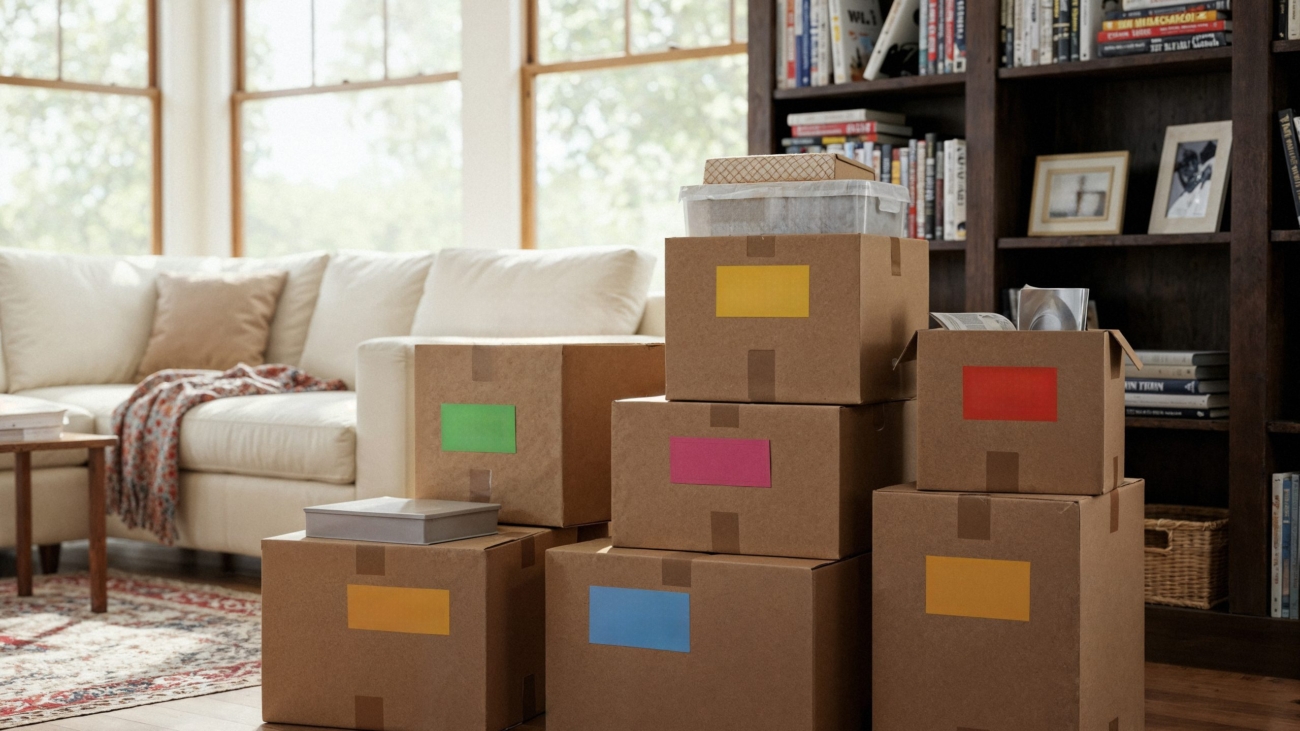
Color-code boxes: Use tape or stickers mapped to rooms for faster loading and smoother move-in.
-
Label with room and category: For example, “Kitchen — Pantry,” “Kitchen — Dishes,” “Kitchen — Appliances.”
-
Use what you already own: Suitcases for books, laundry baskets for soft goods, pots for small kitchen items, storage bins for office supplies or toys.
-
Protect breakables: Wrap fragile items in towels, T-shirts, or pillowcases; use socks for glasses.
Logistics Before Moving Week
-
Week One: Gather boxes, tape, labels, bubble wrap; schedule movers; measure furniture; collect spare bins and suitcases.
-
Week Two: Arrange utility activation/shutoff, forward mail, update subscriptions, notify schools, doctors, and banks.
-
Week Three: Make a moving inventory, schedule donation pickup, list large items for sale, confirm travel plans.
-
Week Four: Deep clean emptied rooms, check closets and storage areas, photograph for deposit records.
Packing a Messy Home in a Month
Focus on speed, not perfection. Start with visible areas (floors, countertops, entryways, dining tables) to reduce visual clutter. Work in short, timed sessions of 30–60 minutes per room. Use a “maybe” bin for undecided items, and keep donation boxes in sight to ensure they are filled and removed.
Room-by-Room Tips
-
Bedrooms: Pack out-of-season clothes first, then decorative items, then drawers. Use small boxes for heavy items and keep a sleep essentials pile for the last night.
-
Living Room: Wrap framed art, label cords, pack books and media in small boxes, and photograph electronics. Group décor for easier setup later.
-
Kitchen: Pack rarely used appliances and servingware first, then pantry items. Save a “kitchen survival kit” for the final days.
-
Bathrooms: Pack backup toiletries early; combine daily-use items in a small caddy for the last week; protect anything that might leak and discard expired products.
-
Garage/Outdoors: Drain liquids, bundle long items, label toolboxes, and keep outdoor and garden tools separate and organized.
FAQs
-
How long does it take to pack a house? Typically three to four weeks with early decluttering, though 6–8 weeks is ideal for larger homes.
-
What should be packed first? Storage areas, seasonal items, and rarely used possessions. Leave daily essentials for the final days.
-
Should you hire professional movers or packers? Consider professionals if you have a large home, a long-distance move, heavy or bulky items, or limited time/mobility. Most packers handle everything except hazardous materials, open liquids, and valuables.